
Sketchbook Habits of Working Animators: What We Learned from Montreal’s Animation Pros
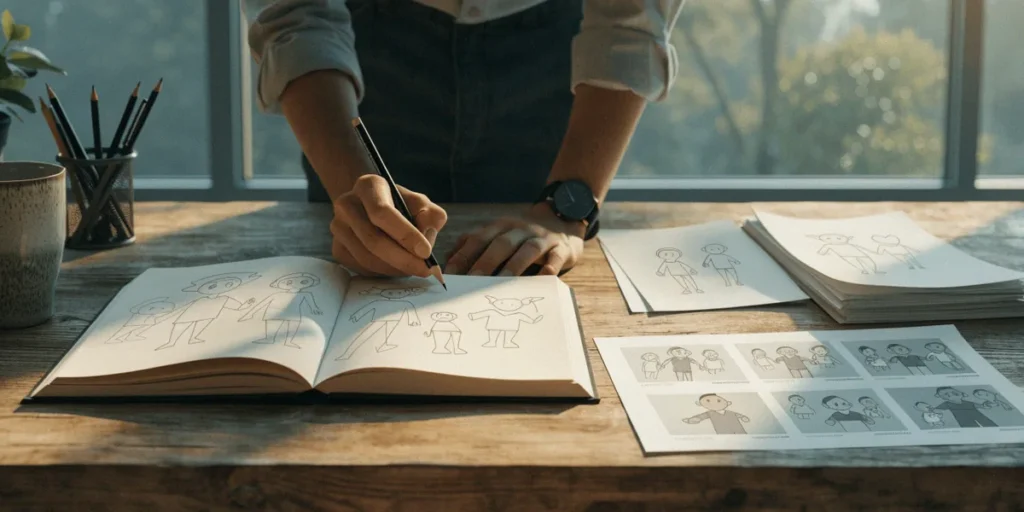
You flip open the worn cover of a sketchbook on a desk at a Montreal animation studio, and the first thing you notice isn’t a polished drawing — it’s a page of thirty-second scribbles. A barista mid-pour, a hand gripping a coffee cup, a bus rider’s slouched shoulders. Flip a few pages and the scribbles turn into clean construction lines, then into character poses, then into thumbnails for a shot that ended up in a feature film. The book isn’t a showcase. It’s a record of daily work. That raises the question we hear from nearly every student who walks into our Montreal art classes: what daily habits actually separate working animators from aspiring ones?
Why Working Animators Never Stop Sketching
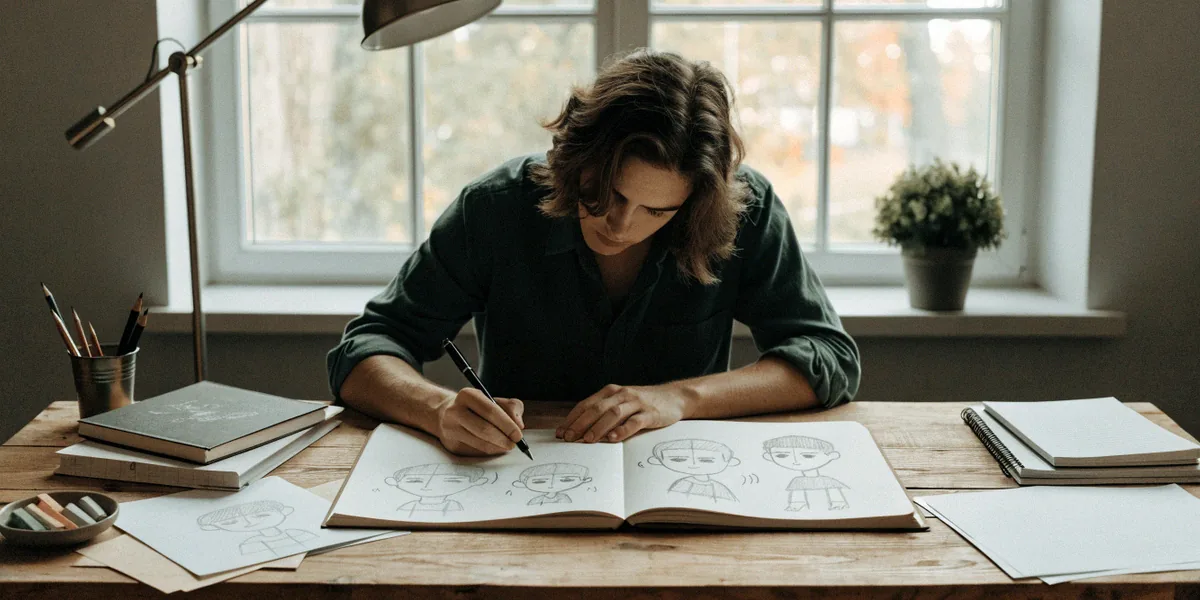
Talk to animators at Sony Pictures Imageworks in Montreal and you’ll notice something quickly: their sketchbooks are tools, not trophies. Nobody waits for inspiration. They draw on lunch breaks, in story meetings, while waiting for renders. The habit isn’t about producing beautiful pages — it’s about keeping the hand and eye connected so that visual memory stays sharp and speed stays high. In production, you’re often asked to rough out a pose or a sequence beat under deadline, and the animators who can do that confidently are the ones who never stopped sketching.
The Difference Between a Sketchbook and a Portfolio
A portfolio is curated. It’s the highlight reel you send to studios, and every page is chosen. A sketchbook is the opposite — it’s messy, experimental, and honest. Working animators use sketchbooks to fail safely: to try a weird pose, to draw a hand twenty times, to test a shape language before committing to it in a shot. When we review student work, we can tell within a few pages whether someone draws for themselves or only draws for a portfolio.
How Daily Drawing Supports Animation Training
Animation training isn’t just software and timing charts. It’s observation. Daily drawing builds three things that no tutorial can replace:
- Visual memory — you can recall how a coat folds or how a heavy character shifts weight.
- Speed — you can block out a pose in seconds during a review or a pitch.
- Confidence — you stop freezing when a director asks for twenty roughs by end of day.
Gesture Drawing: The Core Habit We See in Every Pro’s Book
If there’s one habit that shows up in every professional sketchbook we’ve seen, it’s gesture drawing. Quick poses, thirty seconds to two minutes, no erasing. In Montreal, students have access to gesture drawing sessions through Montreal art classes and life drawing sessions at Concordia University, and the pros treat those sessions as ongoing practice, not something you graduate from. Gesture trains you to see the action line first — the line of energy that runs through a pose — before you worry about anatomy or detail.
Timed Gesture Drawing Routines
Timed poses force decisions. When you only have thirty seconds, you can’t noodle. You draw the spine, the tilt of the hips, the direction of the head, and you’re done. Animators often run their own timed sessions at home with a timer and a reference site, or they join drop-in sessions around the city. The point isn’t the drawing on the page — it’s the reflex you’re building.
Capturing Weight and Flow in Few Lines
Gesture isn’t just about movement. It’s about weight. A character leaning on a counter, a boxer shifting onto a back foot, a tired parent carrying a toddler — each pose has a flow and a center of gravity. When you practice capturing that in three or four lines, you’re doing the same mental work you’ll do when you plan a keyframe. That’s why we push gesture drawing so hard in our animation training programs.
Figure Drawing Habits That Translate to Animation
Figure drawing from life is where gesture gets tested against real anatomy. In Montreal, you can draw from live models at the Montreal Museum of Fine Arts, which hosts figure drawing workshops, or at local drop-in sessions around the city. Our team recommends at least three life drawing sessions per week for students who are serious about animation. That sounds like a lot until you realize how quickly the payoff shows up in your work.
Studying Anatomy Through Repeated Sketches
You don’t learn anatomy from one perfect drawing. You learn it from drawing the same shoulder fifty times from different angles until you can construct it from memory. Working animators keep anatomy notes in their sketchbooks — small diagrams, muscle groups, proportion breakdowns — and revisit them regularly. It’s not glamorous, but it’s the difference between a pose that reads and a pose that looks off in a way you can’t quite name.
Using Figure Drawing to Build Character Poses
Once you understand the figure, you can push it. You can exaggerate a spine, stretch a limb, compress a torso for a comedic beat. Figure drawing gives you the baseline so that stylization is a choice, not a guess. Animators routinely flip back through old life drawings when they’re stuck on a character pose — the answer is usually already in the book.
How Animators Organize Their Sketchbooks for Portfolio Success
Organization matters more than most students expect. Animation portfolio reviewers in Canada aren’t just looking for polished pieces — they’re looking for consistency and growth over time. A well-organized sketchbook makes that growth visible.
Dating and Annotating Sketches
Every page gets a date. Some animators add a short note: what they were studying, what worked, what didn’t. Six months later, those notes become a map of your progress. When you’re assembling an animation portfolio, dated pages prove you’ve been putting in the hours, not just cramming the week before a deadline.
Mixing Digital and Traditional Media
Most working animators keep both. A pocket sketchbook for pencil and pen, plus a tablet for digital studies and quick color tests. Mixing media keeps you flexible and shows reviewers you can move between traditional fundamentals and digital production. We encourage students to print out their best digital sketches and paste them into their physical books so everything lives in one place.
Building a Sketchbook Routine That Survives Deadlines
Here’s the honest part: production schedules at studios like Ubisoft and DNEG in Montreal are demanding. Nobody has three free hours a day. The animators who keep sketching do it in small windows — and they plan for those windows in advance.
Micro-Sketching During Breaks
Five minutes is enough. A hand, a face, a gesture from a reference photo. Micro-sessions add up to hundreds of drawings a month, and they keep the habit alive when a full session isn’t possible. We suggest keeping a small kit — pencil, pen, pocket book — within arm’s reach at all times.
Sketching on the Go in Montreal
The STM, Montreal’s public transit system, is one of the best free figure drawing classrooms in the city. Riders hold poses without knowing it. Commuters read, sleep, argue, and shift weight in ways that are perfect for gesture practice. A pocket sketchbook and a pen are all you need. Our students often tell us their commute became the most consistent drawing time of their week.
What We Tell Our Students: Start Small, Stay Consistent
Our teaching philosophy at Studio Technique Montreal is simple: five minutes a day beats three hours once a week. Consistency builds the reflex. Marathon sessions build sore wrists and abandoned sketchbooks. Our animation training programs incorporate regular sketchbook reviews and one-on-one feedback so students get used to showing unfinished work — which is exactly what happens in a real studio.
The Five-Minute Daily Sketch Challenge
We ask every student to commit to five minutes a day for thirty days. No exceptions, no catching up. Draw a hand, a foot, a gesture, a coffee cup. At the end of the month, flip back through the book. The improvement is usually obvious, and more importantly, the habit has started to stick.
How Our Montreal Art Classes Reinforce Sketchbook Habits
In our Montreal art classes, sketchbooks aren’t optional. We review them alongside finished work because we want students to see their own thinking. Instructors give direct feedback on gesture, construction, and observation — the same things working animators still practice years into their careers.
Sketchbook habits are the foundation of a strong animation portfolio. Not the polished pages, not the finished renders — the daily drawings nobody sees. If you’ve been waiting for the right moment to start, this is it. Pick up a pencil today, even for five minutes, and see where the habit takes you.
FAQ
How often should I draw in my sketchbook to improve at animation?
Daily, even briefly. Five to fifteen minutes a day beats a single long session each week. Consistency builds the visual memory and speed that animation work demands.
Do I need to attend life drawing sessions in Montreal to build a strong portfolio?
It helps enormously. Life drawing at places like the Montreal Museum of Fine Arts or drop-in sessions around the city trains observation and anatomy in ways that photos can’t replicate. We recommend at least three sessions per week for serious students.
What should I draw in my sketchbook if I’m preparing an animation portfolio?
Gesture drawings, figure studies, hands, expressions, and character poses. Date every page and mix traditional and digital work. Reviewers in Canada look for consistency and growth, not just polished final pieces.
How do working animators keep sketching during busy production cycles?
They use micro-sessions. A few minutes during a break, a pocket sketchbook on the STM commute, a quick gesture study before a meeting. Small, frequent sessions keep the habit alive when long studio time isn’t available.
Does Studio Technique Montreal include sketchbook reviews in its animation training?
Yes. Our animation training programs include regular sketchbook reviews and one-on-one feedback, because we believe the daily drawing habit is what separates students who improve quickly from those who plateau.