
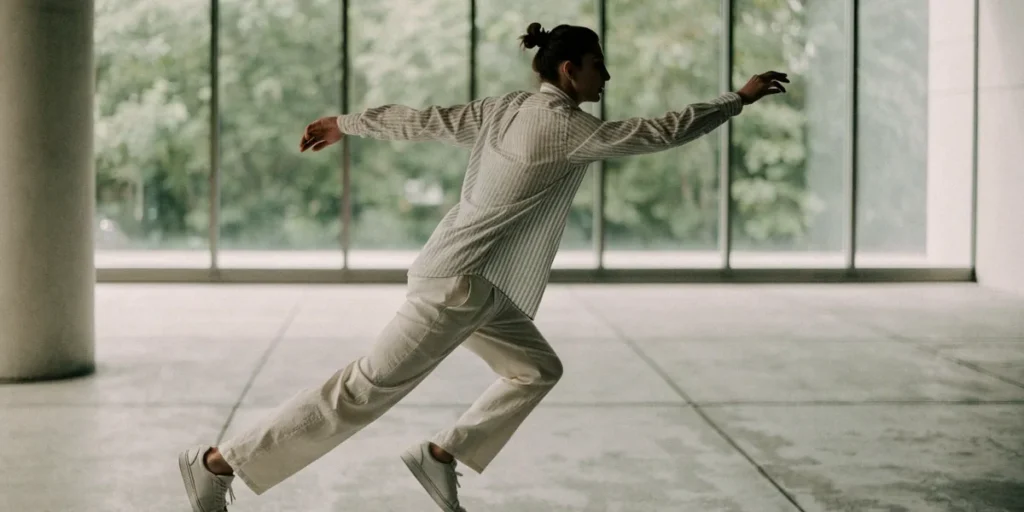
Line of Action: The Secret to Dynamic Poses
The model settles into a pose — weight shifted onto one hip, one arm sweeping across the torso, chin tilted. On the newsprint, a student hesitates, then commits to a single confident stroke that runs from the crown of the head, curves through the spine, and lands at the heel. In that one line, the entire energy of the pose is already there. But ask a room of artists why that line matters, and most will shrug. Why do so many of us overlook the fundamental tool that separates a stiff mannequin from a living figure?
What Is the Line of Action (And Why Most Artists Miss It)
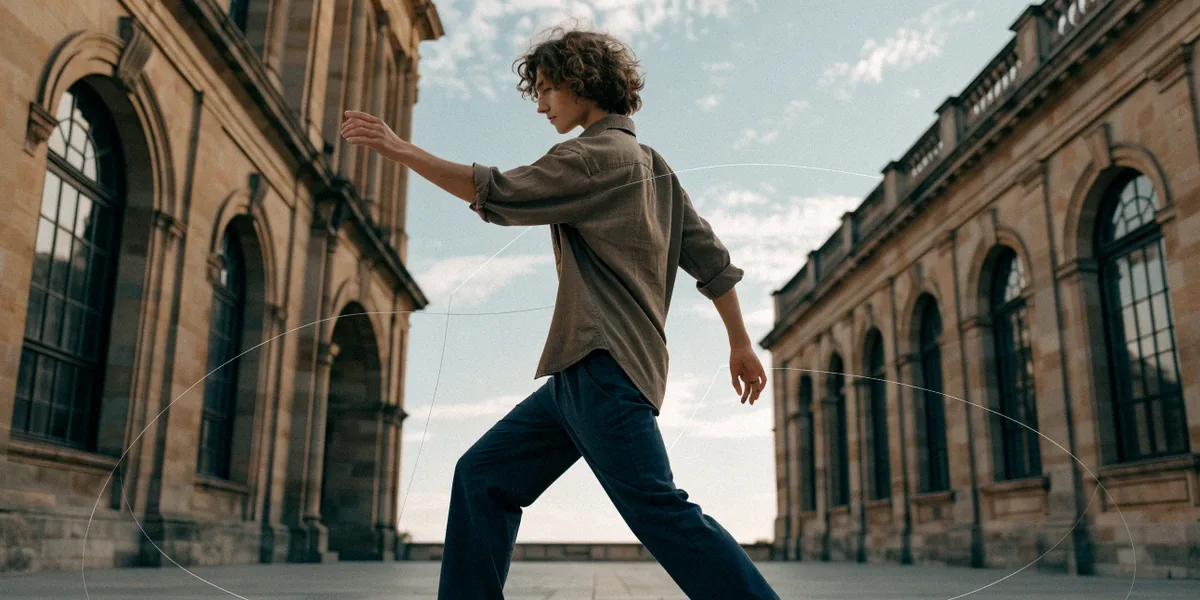
The line of action is the invisible thread that runs through a pose, from head to toe, capturing its rhythm, direction, and weight. It is not an outline and it is not anatomy — it is the gesture’s spine, the path your eye travels when you take in the figure in a single glance. At Studio Technique Montreal, we watch students struggle with stiff, wooden poses semester after semester, and nine times out of ten the problem traces back to this: they started drawing contours before they ever found the action.
It is an easy step to skip. Contours feel productive — you can see the edge of an arm, so you draw the edge of an arm. The line of action, by contrast, is an abstraction. It requires you to look at a whole body and reduce it to one sweeping movement. That takes confidence, and confidence takes practice.
The Difference Between Contour and Action
Contour describes where a form ends. Action describes where it is going. A contour drawing of a dancer can be technically flawless and still feel dead, because it records shape without recording momentum. The line of action comes first; contours and anatomy hang off it like clothing on a wire. When the wire is straight and vertical, the figure looks like a soldier at attention. When the wire tilts, curves, and snaps, the figure looks alive.
Common Misconceptions in Figure Drawing
- “The line of action is the spine.” Not always — it can run through a leg, an arm, or even a prop the figure is holding. It follows the dominant movement, not the skeleton.
- “It only applies to exaggerated cartoon poses.” Realist painters from Michelangelo to Andrew Wyeth built figures on strong action lines.
- “I’ll add it later.” You can’t bolt dynamism onto a finished drawing. It has to be the first decision you make.
- “One line per pose.” A pose can have a primary line of action plus secondary rhythms — but the primary one comes first.
How Gesture Drawing Builds the Foundation for Dynamic Poses
Gesture drawing is not about details. It is about capturing movement in seconds — often fewer than thirty. In our Montreal art classes, we drill 30-second poses relentlessly, because speed forces you to abandon trivia and commit to the essential line. You cannot render an eyelash in 30 seconds. You can, however, capture the twist of a torso and the swing of an arm, and that is exactly the skill animation training demands.
The 30-Second Rule: Why Speed Matters
The 30-second gesture drawing drill is a staple in our Montreal art classes for a simple reason: hesitation kills gesture. When students have five minutes, they draw outlines. When they have thirty seconds, they draw movement. That compressed timeframe trains the eye to identify the line of action instantly — a skill that pays off whether you are sketching commuters at Place des Arts or blocking out a character’s key poses in a shot.
From Gesture to Structure: A Step-by-Step Approach
- Find the line of action first — one sweeping stroke that captures the pose’s direction and weight.
- Block in the major masses (ribcage, pelvis, head) along that line.
- Attach the limbs, letting them support or contrast the main rhythm.
- Refine anatomy and contour only after the gesture reads clearly.
- Check your drawing from across the room — if the action line disappears at a distance, it was never strong enough.
Applying the Line of Action in Animation Training
Animators live and die by the line of action. Every key pose in a shot needs a clear, readable silhouette built on a strong action line, or the motion will feel limp no matter how polished the rendering. Watch the “Hi-Ho” sequence in Snow White, the Genie’s transformations in Aladdin, or the exaggerated runs in The Incredibles — each pose is a masterclass in directional line. Montreal is home to major animation studios like Squeeze and Moment Factory, and the artists working there rely on the same principle daily, whether they are animating a character rig or designing motion for an immersive installation.
Case Study: A Walk Cycle with a Strong Line
A walk cycle is the classic test. A weak walk has a vertical, static spine and limbs that move like pendulums. A strong walk has a line of action that shifts and reverses with each step — the body rises on the passing position, drops on the contact, and tilts to counterbalance the swinging leg. When we review student walk cycles at Studio Technique Montreal, the first thing we check is whether the action line changes from frame to frame. If it doesn’t, the character looks like it is marching on a treadmill.
Avoiding Stiffness in Character Animation
Stiffness almost always comes from symmetry. When both shoulders sit level and the hips are parallel, the figure reads as a diagram, not a character. Push the line of action further than feels comfortable — tilt the hips, drop one shoulder, let the head lead or lag. In animation, contrast between poses is what sells motion, and contrast starts with the action line.
Exercises to Master the Line of Action
Like any skill, the line of action improves with deliberate repetition. Fortunately, Montreal offers ideal training grounds. Life drawing sessions at Place des Arts are a favorite among our students — the foot traffic alone provides endless quick gestures. Reference photos work too, especially sports photography and dance imagery. And nothing beats analyzing master drawings, where you can reverse-engineer the decisions that made a pose unforgettable.
The One-Line Pose Challenge
Our team’s favorite exercise is the one-line pose challenge: draw an entire figure using a single unbroken line, starting at the head and ending at the foot. No lifting the pencil, no second passes. The constraint forces you to think about rhythm and flow instead of contour. Do twenty of these before a life drawing session and you will feel the difference immediately.
Analyzing Master Works: From Michelangelo to Milt Kahl
- Michelangelo’s “Dying Slave”: trace the S-curve that runs from the raised arm through the torso to the bent knee.
- Milt Kahl’s character poses: the legendary Disney animator built even quiet poses on bold, clear action lines.
- Eadweard Muybridge’s motion studies: overlay a single line on each frame to see how the action shifts through a walk or run.
Building an Animation Portfolio That Stands Out
Mastering the line of action is not just an academic exercise — it is a portfolio strategy. Top animation schools and studios look for dynamic posing above almost everything else, because it signals that an applicant understands motion, weight, and appeal. Canadian animation schools like Sheridan College emphasize dynamic posing in portfolios, and recruiters at Montreal studios apply the same filter. Our Montreal art classes include portfolio review sessions where we assess gesture work, life drawing, and character poses side by side.
What Recruiters Look For in a Portfolio
- Life drawings with clear, confident gesture — not just rendered shading.
- Character poses that read instantly in silhouette.
- Walk cycles and action tests with weight and follow-through.
- Sketchbook pages showing consistent daily practice.
Common Portfolio Mistakes to Avoid
The most frequent mistake we see is a portfolio full of static, front-facing figures. A second is over-rendering: polished shading on a stiff pose impresses no one. A third is hiding weak gesture work behind fan art or copied styles. Recruiters can spot a strong line of action in two seconds — and its absence just as fast.
FAQ
What exactly is the line of action in figure drawing?
It is the imaginary line that runs through a pose from head to toe, capturing its overall movement, rhythm, and weight. It is the first thing you should establish in any drawing, because every other element — anatomy, contour, shading — hangs off it.
How long should a gesture drawing take?
In our Montreal art classes, we typically drill 30-second poses, though sessions range from 10 seconds to 2 minutes. The short timeframe forces you to prioritize the line of action over details, which is exactly the point.
Do I need life drawing experience to join Studio Technique Montreal’s classes?
No. Our figure drawing and animation training classes welcome beginners and experienced artists alike. We group students by level and provide personalized feedback during every session, including portfolio review for those preparing applications.
Why do animation studios care so much about dynamic posing?
Because animation is the art of movement. A pose with a strong line of action communicates energy, weight, and intention in a single frame. Studios like Squeeze and Moment Factory in Montreal need artists who can build believable motion from the ground up, and that starts with gesture.
Where can I practice figure drawing in Montreal?
Place des Arts is a popular location for life drawing and quick sketching, and there are regular open studio sessions across the city. Our classes also include structured drills and reference-based exercises you can repeat at home between sessions.
Mastering the line of action is a genuine game-changer. It transforms stiff, tentative figures into poses that breathe, and it is the single skill that ties figure drawing to professional animation work. Practice daily — even ten minutes of 30-second gestures — and consider joining our Montreal art classes for personalized feedback. Your portfolio, and your characters, will thank you.