
Life Drawing Classes in Montreal: What to Expect
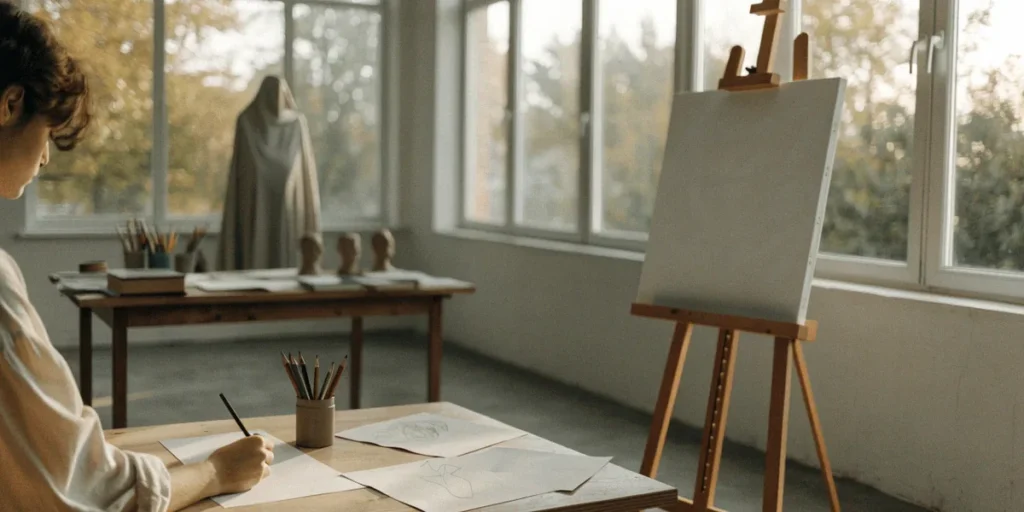
You push open the studio door, clutch your newsprint pad a little too tightly, and immediately wonder if everyone else can tell it’s your first time. The room smells faintly of charcoal and coffee. A model is already on the platform adjusting a robe. Somewhere near the window, someone’s arm is moving across paper in long, confident strokes. That mix of nerves and adrenaline is something almost every animator in this city has felt — walking into a first life drawing session is a rite of passage, and it’s one of the best decisions you’ll make for your craft.
Why Life Drawing Matters for Animation Training

Animation is the art of making drawings feel alive, and there’s no faster way to learn that than drawing from a living, breathing human being. A model shifts weight, breathes, and holds tension in ways a photograph never captures. When you spend hours studying those shifts, you start to internalize how bodies actually move — which is exactly what you need when you’re animating a character who has to feel believable on screen.
Montreal has one of the strongest animation communities in the world, and figure drawing sits at the center of it. The National Film Board of Canada (NFB) built its reputation on hand-drawn classics where every frame depended on a deep understanding of the human form. Ubisoft Montreal, one of the largest game studios on the planet, hires animators who can pose characters convincingly in three dimensions. Both worlds trace back to the same skill: the ability to observe and draw the figure with confidence.
The Link Between Gesture Drawing and Believable Animation
Gesture drawing is the practice of capturing a pose in 30 seconds or less — the line of action, the tilt of the hips, the direction of the gaze. It teaches you to see the whole pose before the details. In animation, that instinct is everything. A walk cycle, a jump, a reaction shot: all of them live or die on whether the underlying pose reads clearly. Animators who practice gesture drawing regularly tend to pose their characters with more energy and less stiffness.
How Montreal’s Animation Industry Values Life Drawing
If you look at portfolios from animators working at the NFB or Ubisoft Montreal, you’ll almost always find a section of figure drawings. Studios here treat life drawing as proof that a candidate can observe, simplify, and communicate. It’s not a nice-to-have — it’s a baseline expectation for many animation training programs and hiring reviews in the city.
What Happens in a Typical Life Drawing Session
Most sessions follow a predictable rhythm, and once you know it, the nerves settle fast. Here’s how a typical class at Studio Technique Montreal or a similar atelier unfolds.
- Warm-up gestures: A series of 30-second to 2-minute poses to loosen your arm and train your eye.
- Medium poses: 5 to 10 minutes each, where you start building structure and proportion.
- Long poses: 20 minutes or more, giving you time for shading, anatomy, and finish.
- Critique or review: Some instructors walk the room; others hold a group discussion at the end.
The model takes breaks every 20 to 25 minutes, and the room is usually silent except for the instructor’s voice. Bring water, expect to stand or sit on a stool, and don’t be surprised if your first few drawings look nothing like what you imagined. That’s normal.
From 30-Second Gestures to 20-Minute Poses
The short poses are not throwaways — they’re the most important part of the session. They force you to commit to a line before your brain talks you out of it. The longer poses then let you apply what you learned: proportion, weight, and how light falls across a form. If you only ever draw long poses, you’ll miss the speed and instinct that animation demands.
Materials You’ll Need (and What We Recommend)
You don’t need much to start. Here’s what we suggest for your first few sessions:
- Newsprint pad (18×24 inches is standard)
- Vine charcoal or a soft graphite pencil
- Kneaded eraser
- Clipboard or drawing board
- A portfolio or tube to carry work home
Skip the fancy supplies at first. Focus on quantity of drawings, not preciousness of materials.
Finding the Right Life Drawing Class in Montreal
Montreal has options for every schedule and budget. Drop-in sessions at the Montreal Museum of Fine Arts are a great low-commitment entry point, and there are dedicated ateliers across the Plateau and Mile End that run weekly figure drawing nights. Our own animation training programs at Studio Technique Montreal combine life drawing with structured instruction aimed at animators and portfolio builders.
Drop-In vs. Structured Courses
Drop-in sessions are flexible and cheap — you show up, pay a small fee, and draw. They’re perfect for building volume. Structured courses cost more but give you feedback, progression, and assignments. If you’re aiming for an animation portfolio, we recommend a mix: drop-ins for mileage, a structured course for direction.
What to Look for in an Instructor
Good life drawing instructors don’t just draw well — they explain. Look for someone who can talk about gesture, anatomy, and construction in plain language, and who gives individual feedback rather than only group demos. Ask whether they have experience in animation, illustration, or fine art, and whether their classes are geared toward beginners or working artists.
How Life Drawing Boosts Your Animation Portfolio
A strong animation portfolio shows range, and figure drawings prove you can observe. When reviewers at studios like Ubisoft Montreal or portfolio events around the city flip through your book, they want to see that you’ve spent real hours with a pencil in hand, studying real bodies. Consistent life drawing also improves your character poses, your thumbnails, and your storyboard work.
Selecting the Best Figure Drawings for Your Portfolio
Pick drawings that show clear gesture, strong line of action, and confident construction. Include a mix of short gestures and longer studies. Ten to fifteen well-chosen drawings beat fifty mediocre ones every time. Group them together so reviewers can see your range at a glance.
Common Mistakes to Avoid
- Including only polished, over-rendered drawings with no gesture
- Showing the same pose or model repeatedly
- Leaving in obvious proportion errors you already know how to fix
- Forgetting to date or label your work
Etiquette and Unwritten Rules of Life Drawing
Montreal’s studio culture is relaxed but respectful, and a few unwritten rules keep it that way. The model is a collaborator, not a subject to be stared at between poses. Phones stay away. Conversations stay quiet. If you arrive late, slip in without disrupting the pose.
Do’s and Don’ts in the Studio
- Do arrive early to set up and warm up.
- Do thank the model at the end of the session.
- Don’t photograph the model or the room without permission.
- Don’t comment on the model’s body or appearance.
- Don’t pack up loudly in the middle of a long pose.
Building a Supportive Art Community
Life drawing is more fun when it’s social. Swap drawings with the person next to you, join a weekly group, and follow local ateliers on social media. Montreal’s animation and illustration community is small enough that the people you sketch beside today may be your colleagues on a production tomorrow.
Frequently Asked Questions
Do I need prior drawing experience to join a life drawing class in Montreal?
No. Most drop-in sessions and beginner-friendly Montreal art classes welcome total newcomers. Bring a pad, a charcoal stick, and a willingness to make bad drawings for a few weeks.
How often should I practice figure drawing to improve my animation portfolio?
We recommend at least one session per week, ideally two. Consistency matters more than marathon sessions — regular short practice builds muscle memory faster than occasional long ones.
Are nude models used in Montreal life drawing classes?
Yes, most traditional life drawing sessions use nude models, which is standard practice worldwide. Some beginner workshops use partially clothed or draped models. Check the class description before signing up.
Can life drawing help me get into an animation training program?
Absolutely. Programs and studios look for strong observational skills, and figure drawings are the clearest evidence you have them. A dedicated sketchbook of gesture drawings can be one of the strongest parts of your application.
Life drawing is a journey, not a destination. Your first session will feel awkward, your tenth will feel better, and your hundredth will feel like second nature. Whether you start with a drop-in at the Montreal Museum of Fine Arts or a structured course at Studio Technique Montreal, the important thing is to show up, draw, and keep going. The animators you admire most got there one gesture at a time — and so will you.